
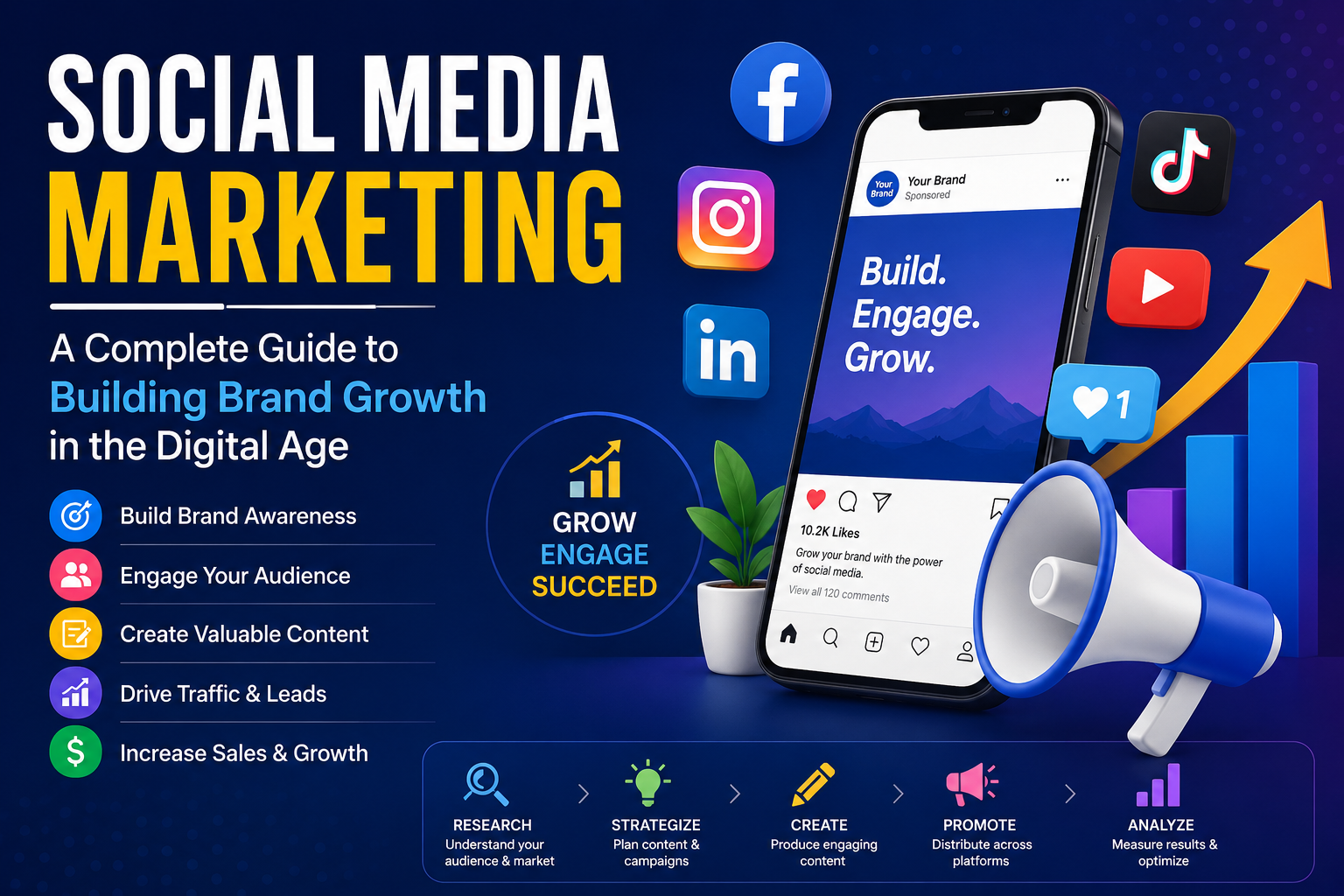
Social Media Marketing: A Complete Guide to Building Brand Growth in the Digital Age
The way businesses connect with customers has changed dramatically over the last decade. Traditional advertising methods like newspapers, radio, and television are no longer enough to capture attention in a fast-moving digital world. Today, social media has become one of the strongest marketing channels for businesses of all sizes.
Social Media Marketing (SMM) is the process of promoting a business, product, or personal brand through social platforms such as Instagram, Facebook, LinkedIn, YouTube, TikTok, Pinterest, and X. It allows businesses to reach audiences directly, build trust, and create long-term customer relationships.
Unlike traditional advertising, social media marketing is interactive. Customers can comment, share, message, review, and engage with brands instantly. This creates stronger communication and helps businesses understand what their audience truly wants.
From small startups and freelancers to international companies, everyone is investing in social media marketing because it delivers visibility, engagement, leads, and sales. It is no longer just about posting pictures or updates—it is about strategy, consistency, storytelling, and building a strong online presence.
As people spend more time online every day, businesses that master social media marketing gain a major advantage in today’s competitive market. This article will explore everything you need to know about social media marketing, including its importance, benefits, strategies, tools, challenges, and future trends.
What is Social Media Marketing?
Social Media Marketing refers to using social networking platforms to promote brands, products, and services while building strong relationships with audiences.
It includes activities such as:
Creating content
Managing business profiles
Running paid advertising campaigns
Engaging with followers
Influencer collaborations
Brand awareness campaigns
Community management
Tracking campaign performance
The main goal of social media marketing is to attract the right audience, increase trust, and turn attention into business growth.
Social media allows businesses to market in real time. Customers can interact instantly, ask questions, leave feedback, and share content with others. This creates faster communication and stronger customer loyalty.
Why Social Media Marketing Matters
Social media is no longer optional for businesses—it is essential. With billions of users active every day, social platforms offer one of the biggest opportunities for business growth.
Here’s why social media marketing is so important.
Huge Audience Reach
Platforms like Instagram, Facebook, and YouTube give businesses access to millions of potential customers worldwide.
Strong Brand Awareness
Regular posting and audience engagement help brands become more visible and recognizable.
Affordable Marketing
Compared to traditional advertising, social media marketing is more cost-effective and flexible.
Direct Communication
Businesses can interact directly with customers through comments, messages, and live sessions.
Higher Conversion Opportunities
Targeted content and ads help businesses turn followers into customers.
Better Trust and Loyalty
Consistent engagement builds stronger emotional connections with audiences.
Popular Social Media Platforms for Marketing
Each platform serves different business goals and audience types. Choosing the right one is important for success.
Instagram Marketing
Instagram is ideal for visual storytelling and brand engagement.
It works well for:
Fashion brands
Beauty businesses
Restaurants
Personal branding
Influencers
E-commerce stores
Features like Reels, Stories, Highlights, and Shopping make Instagram highly effective for growth and conversions.
Facebook Marketing
Facebook remains one of the strongest platforms for business promotion.
It is useful for:
Paid advertising
Community building
Local business promotion
Customer support
Lead generation
Facebook Ads offer advanced targeting options that help businesses reach the right audience.
LinkedIn Marketing
LinkedIn is the best platform for professional networking and B2B marketing.
Businesses use LinkedIn for:
Corporate branding
Personal authority building
Lead generation
Recruitment
Professional networking
It is highly effective for consultants, agencies, and service-based businesses.
YouTube Marketing
Video marketing has become one of the most trusted forms of content.
YouTube helps businesses with:
Product demonstrations
Tutorials
Educational videos
Customer trust building
Long-term audience growth
Video content creates stronger emotional connections than text alone.
TikTok Marketing
TikTok is growing rapidly and offers strong viral marketing opportunities.
It is especially useful for:
Short-form video content
Brand awareness
Youth-focused marketing
Creative campaigns
Businesses that adapt quickly to trends perform well on TikTok.
X (Twitter) Marketing
X supports real-time communication and industry conversations.
It helps with:
Customer support
Brand voice development
Industry updates
Networking
Public engagement
Building a Powerful Social Media Marketing Strategy
Success in social media marketing requires planning, not random posting.
Set Clear Marketing Goals
Every strategy should begin with clear objectives.
Examples include:
Increasing brand awareness
Driving website traffic
Generating leads
Improving customer engagement
Growing online sales
Building community trust
Clear goals make campaigns more focused and measurable.
Know Your Target Audience
Understanding your audience helps create better content.
Businesses should identify:
Age and gender
Interests and behaviors
Pain points
Buying habits
Preferred platforms
Better targeting leads to better results.
Create High-Value Content
Content is the foundation of social media success.
Strong content includes:
Educational posts
Entertaining videos
Customer success stories
Product showcases
Behind-the-scenes content
User-generated content
Industry tips
Useful and engaging content builds trust and encourages sharing.
Maintain Posting Consistency
Consistency keeps your brand visible and active.
Using content calendars helps businesses plan posts, maintain frequency, and improve organization.
Regular posting builds stronger audience relationships.
Focus on Engagement
Social media is about conversations, not just broadcasting.
Businesses should:
Reply to comments
Answer direct messages
Run polls and Q&A sessions
Encourage audience participation
Join trending conversations
Higher engagement improves trust and platform visibility.
Use Paid Advertising
Organic reach is valuable, but paid advertising helps scale results faster.
Popular paid campaigns include:
Instagram Ads
Facebook Ads
LinkedIn Ads
YouTube Ads
TikTok Ads
Paid ads improve reach, lead generation, and conversions.
Influencer Marketing Strategy
Influencer partnerships help brands build trust faster.
Businesses work with creators to:
Reach new audiences
Increase credibility
Improve brand awareness
Boost sales
People often trust recommendations from influencers more than direct advertisements.
Best Tools for Social Media Marketing
Professional marketers use tools to save time and improve performance.
Canva
Canva helps create attractive graphics, stories, and visual content quickly.
Meta Business Suite
Useful for managing Facebook and Instagram content and ad campaigns.
Buffer and Hootsuite
These tools help schedule and manage posts across multiple platforms.
Google Analytics
Tracks traffic, user behavior, and conversions from social campaigns.
AI Tools Like ChatGPT
AI helps with captions, content ideas, ad copy, and strategy planning.
Benefits of Social Media Marketing
SMM offers powerful advantages for businesses and personal brands.
Increased Online Visibility
Consistent presence improves recognition and reach.
Better Customer Relationships
Direct engagement builds trust and stronger loyalty.
More Website Traffic
Social platforms help drive users to websites and landing pages.
Higher Sales Potential
Strong campaigns convert attention into purchases.
Valuable Customer Insights
Analytics reveal audience preferences and behaviors.
Competitive Advantage
Businesses with strong social strategies outperform slower competitors.
Challenges of Social Media Marketing
Despite its benefits, social media marketing also comes with challenges.
Constant Algorithm Changes
Platforms frequently update their systems, affecting visibility and performance.
High Competition
Millions of brands compete daily for audience attention.
Content Creation Pressure
Businesses must consistently create fresh, high-quality content.
Negative Public Feedback
Handling criticism professionally is important for reputation management.
Time and Resource Management
Managing multiple platforms requires planning and discipline.
The Future of Social Media Marketing
Social media marketing continues evolving rapidly with technology.
Several future trends will shape the next phase of growth.
AI-Powered Marketing
Artificial Intelligence is improving automation, content creation, and customer targeting.
Short-Form Video Dominance
Reels, Shorts, and TikTok videos will continue leading audience engagement.
Social Commerce Growth
Customers increasingly buy products directly from social platforms.
Personal Branding Expansion
More professionals are using social media to build authority and trust.
Community-First Marketing
Brands are shifting from chasing followers to building loyal communities.
Tips for Long-Term Social Media Success
Businesses should follow smart strategies for sustainable growth.
Prioritize Quality
High-quality content always performs better than frequent low-value posting.
Stay Consistent
Consistency creates trust and keeps your audience connected.
Analyze Performance
Track reach, engagement, and conversions regularly to improve strategy.
Use Trends Wisely
Follow trends that match your brand identity instead of copying everything.
Keep Learning
Social media evolves quickly, and continuous learning is necessary for success.
Conclusion
Social Media Marketing has become one of the most important tools for business growth in the modern digital world. It helps businesses connect directly with audiences, build trust, increase visibility, and drive long-term sales through strategic engagement.
From Instagram and Facebook to LinkedIn and TikTok, every platform offers unique opportunities for brands to grow and compete effectively. Success depends on clear strategy, consistent content, strong communication, and understanding customer behavior.
Although challenges like competition and algorithm changes exist, the opportunities are far greater for businesses willing to adapt and innovate.
As technology continues evolving, social media marketing will become even more powerful for brands, entrepreneurs, and freelancers. Businesses that invest in strong social media strategies today will build stronger digital success for tomorrow.
Social media is no longer just a platform for connection—it is the foundation of modern business growth.