
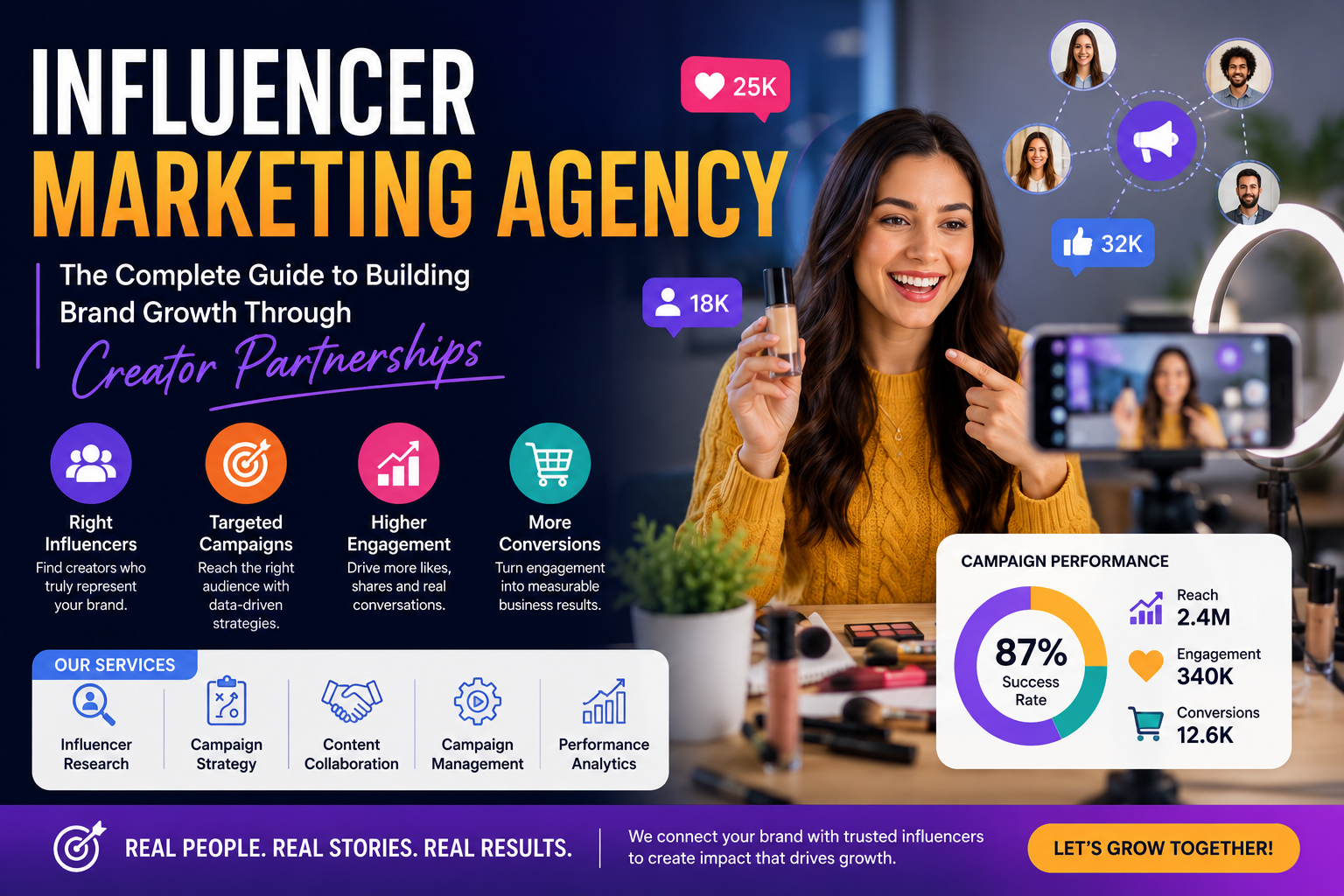
Influencer Marketing Agency: The Complete Guide to Building Brand Growth Through Creator Partnerships
Introduction
In today’s digital world, traditional advertising is no longer enough to capture customer attention. People trust recommendations from real people more than direct advertisements from brands. This shift has made influencer marketing one of the most powerful strategies for modern business growth. At the center of this strategy stands the influencer marketing agency.
An influencer marketing agency helps businesses connect with the right influencers to promote products, services, and brand messages effectively. Instead of brands searching manually for creators, negotiating partnerships, and managing campaigns alone, agencies handle the entire process professionally and strategically.
From Instagram and YouTube to TikTok, LinkedIn, and Facebook, influencers have become powerful voices that shape buying decisions. Businesses of all sizes—from startups to global brands—work with influencer marketing agencies to increase visibility, build trust, and generate sales.
These agencies offer expertise in creator selection, campaign strategy, audience targeting, content management, performance tracking, and ROI optimization. Their goal is not simply to find influencers, but to create meaningful collaborations that drive real business results.
As the creator economy continues growing rapidly, influencer marketing agencies are becoming essential partners for brands that want to stay competitive in the digital marketplace.
This article explores everything about influencer marketing agencies, including what they do, why they matter, how they work, benefits, services, challenges, future trends, and how businesses can choose the right agency for long-term success.
What is an Influencer Marketing Agency?
An influencer marketing agency is a specialized company that helps brands plan, manage, and optimize influencer collaborations for marketing purposes.
These agencies act as a bridge between businesses and content creators by identifying the right influencers and building successful campaigns.
Their responsibilities often include:
-
- Influencer research and selection
-
- Campaign strategy development
-
- Contract negotiation
-
- Content planning
-
- Brand collaboration management
-
- Performance tracking
-
- ROI analysis
-
- Reporting and optimization
Instead of treating influencer marketing as random promotion, agencies create structured campaigns based on clear business goals and measurable outcomes.
They ensure brands work with influencers who align with their target audience, values, and overall marketing strategy.
Why Influencer Marketing is So Powerful
Consumers today trust people more than advertisements. They follow creators for entertainment, education, lifestyle inspiration, and product recommendations.
This makes influencer marketing highly effective.
Trust-Based Marketing
Influencers build loyal communities that trust their opinions and recommendations.
Better Audience Targeting
Brands can reach highly specific audiences through niche creators.
Higher Engagement Rates
Influencer content often performs better than traditional advertisements because it feels more authentic.
Stronger Brand Awareness
Collaborating with creators helps brands gain visibility faster.
Improved Conversion Rates
People are more likely to buy products recommended by someone they trust.
These advantages make influencer marketing a key part of modern digital strategy.
Why Businesses Need an Influencer Marketing Agency
Many businesses try influencer marketing independently, but managing campaigns can quickly become complex.
An influencer marketing agency provides expertise and efficiency.
Access to the Right Influencers
Agencies have networks of trusted creators across multiple industries and platforms.
They help brands avoid fake influencers and choose partners with real engagement and audience quality.
Professional Campaign Strategy
Successful influencer marketing requires more than sending free products.
Agencies create strategic campaigns based on:
-
- Brand goals
-
- Target audience
-
- Platform selection
-
- Content type
-
- Campaign budget
-
- Performance expectations
This improves campaign effectiveness.
Time-Saving Campaign Management
Managing influencer outreach, contracts, content approvals, and reporting takes significant time.
Agencies handle the full workflow so businesses can focus on growth.
Better ROI Tracking
Professional agencies measure campaign success using clear data such as:
-
- Reach
-
- Engagement
-
- Website traffic
-
- Lead generation
-
- Sales conversions
-
- Return on investment
This makes influencer marketing more measurable and reliable.
Services Offered by an Influencer Marketing Agency
Most influencer marketing agencies provide complete end-to-end campaign support.
Influencer Discovery and Vetting
Agencies identify creators based on:
-
- Audience relevance
-
- Engagement quality
-
- Brand alignment
-
- Authenticity
-
- Platform performance
Choosing the right influencer is one of the most important parts of campaign success.
Campaign Planning and Strategy
Agencies create customized influencer marketing plans based on business goals.
This includes:
-
- Platform strategy
-
- Creator selection
-
- Budget planning
-
- Campaign messaging
-
- Timeline management
Content Collaboration
Agencies coordinate content creation between brands and influencers.
This ensures content feels authentic while still aligning with brand guidelines.
Contract Negotiation
Agencies manage:
-
- Pricing discussions
-
- Deliverables
-
- Usage rights
-
- Legal agreements
-
- Payment structures
This protects both brands and creators.
Campaign Monitoring and Reporting
After launch, agencies track campaign performance and provide detailed reports for improvement and future strategy planning.
Platforms Used in Influencer Marketing
Different platforms serve different campaign goals.
Instagram Influencer Marketing
Instagram remains one of the strongest platforms for influencer collaborations.
It works well for:
-
- Fashion
-
- Beauty
-
- Travel
-
- Food
-
- Fitness
-
- Lifestyle brands
Stories, Reels, and product tagging improve visibility and sales.
YouTube Influencer Marketing
YouTube offers long-form content and deep audience trust.
Ideal for:
-
- Product reviews
-
- Tutorials
-
- Educational content
-
- Brand storytelling
It works especially well for technology, education, and product-based businesses.
TikTok Influencer Marketing
TikTok is powerful for fast visibility and viral reach.
Best for:
-
- Short-form videos
-
- Youth-focused marketing
-
- Trend-based campaigns
-
- Brand awareness
Creative and entertaining content performs best here.
LinkedIn Influencer Marketing
LinkedIn is growing for B2B influencer campaigns and professional authority building.
Useful for:
-
- Corporate branding
-
- SaaS marketing
-
- Professional services
-
- Industry leadership
Types of Influencers
Agencies choose influencers based on campaign goals and audience size.
Nano Influencers
Usually 1,000 to 10,000 followers.
Strong trust and high engagement in niche communities.
Micro Influencers
Usually 10,000 to 100,000 followers.
Excellent for targeted campaigns and strong conversions.
Macro Influencers
Usually 100,000 to 1 million followers.
Good for wider brand awareness campaigns.
Mega Influencers
Over 1 million followers.
Best for mass visibility and major brand launches.
Benefits of Working with an Influencer Marketing Agency
Businesses gain several advantages by partnering with professionals.
Stronger Brand Credibility
Influencer recommendations improve trust and reputation.
Faster Campaign Execution
Agencies streamline the process and launch campaigns faster.
Reduced Marketing Risk
Professional management reduces poor partnerships and wasted budgets.
Better Content Quality
Experienced creators produce stronger, more engaging content.
Scalable Growth
Brands can expand influencer campaigns across multiple platforms and markets.
Challenges in Influencer Marketing
Even with strong opportunities, influencer marketing has challenges.
Fake Followers and Fraud
Some influencers have artificial engagement that creates poor campaign results.
Brand Mismatch
Choosing the wrong creator can damage brand reputation.
ROI Measurement Difficulties
Tracking long-term impact can sometimes be complex.
Creative Control Issues
Balancing authenticity with brand messaging requires careful management.
Budget Management
Large campaigns can become expensive without proper planning.
This is why agency expertise becomes valuable.
How to Choose the Right Influencer Marketing Agency
Not all agencies deliver the same quality.
Businesses should consider:
Industry Experience
Choose agencies with proven success in your market.
Creator Network
Strong influencer relationships improve campaign quality.
Reporting Transparency
Clear reporting helps track performance and ROI.
Strategy Approach
Avoid agencies that focus only on followers instead of business goals.
Communication Quality
Strong collaboration improves campaign execution.
The right agency should feel like a long-term growth partner.
Future of Influencer Marketing Agencies
The creator economy continues growing rapidly, and agencies will become even more important.
Future trends include:
AI-Powered Influencer Discovery
Artificial Intelligence will improve creator matching and fraud detection.
Performance-Based Campaigns
Brands will focus more on measurable conversions instead of vanity metrics.
Long-Term Creator Partnerships
Businesses will shift from one-time promotions to long-term ambassador programs.
Social Commerce Growth
More purchases will happen directly inside social platforms.
Virtual Influencers
AI-generated influencers and digital personalities will continue growing.
Conclusion
Influencer marketing agencies have become essential partners for brands that want to grow in today’s digital economy. They help businesses connect with trusted creators, build authentic campaigns, and achieve measurable marketing success.
From creator selection and strategy planning to campaign execution and performance tracking, these agencies turn influencer marketing into a structured and profitable business strategy.
As consumer trust shifts further toward creators and online communities, businesses that invest in professional influencer marketing will gain a strong competitive advantage.
Choosing the right influencer marketing agency is not just about finding influencers—it is about building meaningful brand relationships that drive real growth.
In the future of digital marketing, influencer partnerships will continue shaping how brands connect with people, and agencies will remain at the center of that transformation.